What you're seeing
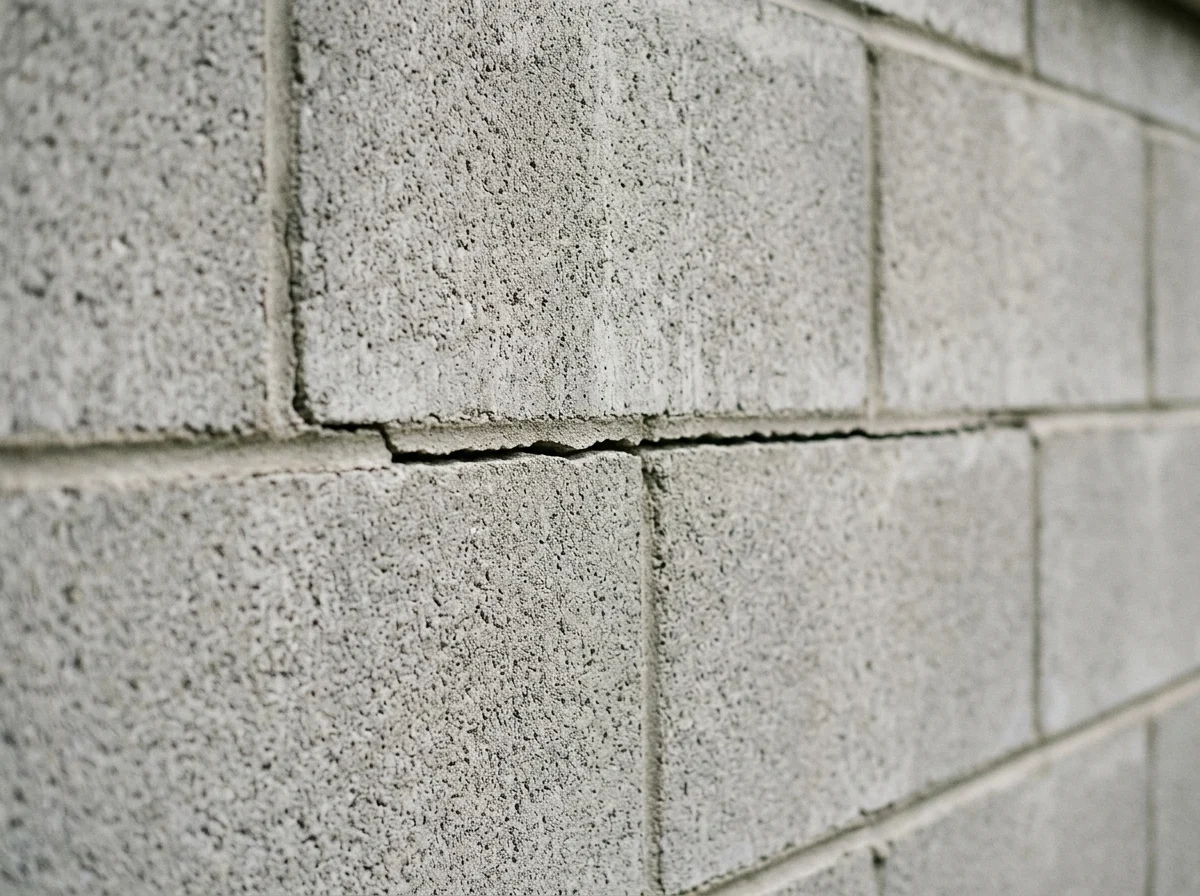
The direction of the crack is the diagnosis
Homeowners usually ask whether a crack is bad. The better question is which way it runs, because that tells us what force put it there.
Three forces, three patterns
Masonry cracks where it is weakest, in a direction set by whatever is acting on it. Here is what we are separating out at the inspection.
Soil pressure pushing in
Settlement pulling down
Shrinkage and age
Not sure which one you have? That's exactly why we diagnose first.
Cracks stay readable, and repairable, for a while
The window where a wall can be stabilized instead of rebuilt is wider than most people think, but it does close.
The pattern is still readable
A crack caught while it is narrow tells a clean story, and the fix that matches it is the smallest one available. Most cracks we diagnose early get stabilized without rebuilding anything.
The wall stops being repairable
Cracks widen, blocks shift out of line, and a wall that has sheared or cracked through cannot be strapped or braced anymore. At that point the section has to come out and be rebuilt, which costs far more and means real disruption.
How we repair a cracked wall
The method follows the pattern. That is the whole point of diagnosing first, and it is why we do not lead with one product for every wall.
Pier Stabilization
Where the crack traces to settlement, steel piers take the settled section down to soil that will hold it and stop the movement that keeps opening the crack.
Best for: Diagonal and stair-step cracking from a dropping footing.
Carbon-Fiber Reinforcement
Where soil pressure is pushing the wall inward, high-strength carbon-fiber straps bond to the wall and lock it in place. No excavation, low profile, and it can be finished over.
Best for: Horizontal cracking with early to moderate inward movement.
When it's cosmetic, we say so
Plenty of cracks are old, stable, and not worth a dollar of structural work. If we measure and find nothing moving, that is what you will hear.
Best for: Hairline cracks with no measurable movement behind them.
We diagnose. We prescribe. We treat.
A lot of foundation repair companies show up to sell you the most expensive thing they install. We show up to figure out what's actually wrong under your home first, then prescribe the repair that fixes it, and tell you straight, even when the answer is "you don't need as much as you were told." That's the difference between a sales call and a diagnosis.
Diagnose
A free in-home inspection by someone who does this work, not a commission salesperson. We look at the real signs, inside and underneath, and walk you through what's actually causing the movement. You get a clear, honest read on where your home stands.
Prescribe
We lay out the right fix for what's actually wrong, not the priciest line item. A plain-English explanation, a fair price in writing, and the warranty terms with it. We go over the plan and your options, and you decide on your own time. No "today only" pressure.
Treat
Dependable work by our own local crew, on time, cleaned up after themselves, and finished on or ahead of schedule, the way our customers describe it. We keep you in the loop the whole way, and we stand behind the work for the life of the structure.
Most foundation companies sell you a fix. We diagnose first, then prescribe only what your home actually needs. That's the difference between an honest local team and a sales quota from out of town.
Wall cracks rarely travel alone
A crack is one reading. What is happening around the rest of the house usually confirms it. These are the signs we check next.
Bowing or leaning walls
Stair-step cracks in brick
Wet or musty crawl space
Not sure which one you have? That's exactly why we diagnose first.
Straight answers about cracked brick and block
Get your wall cracks read by someone who does this work, free.
You won't get a sales pitch. You'll get the pattern explained in plain English, a straight answer on whether it's cosmetic or structural, what it takes to correct it, and a fair price in writing.