What you're seeing
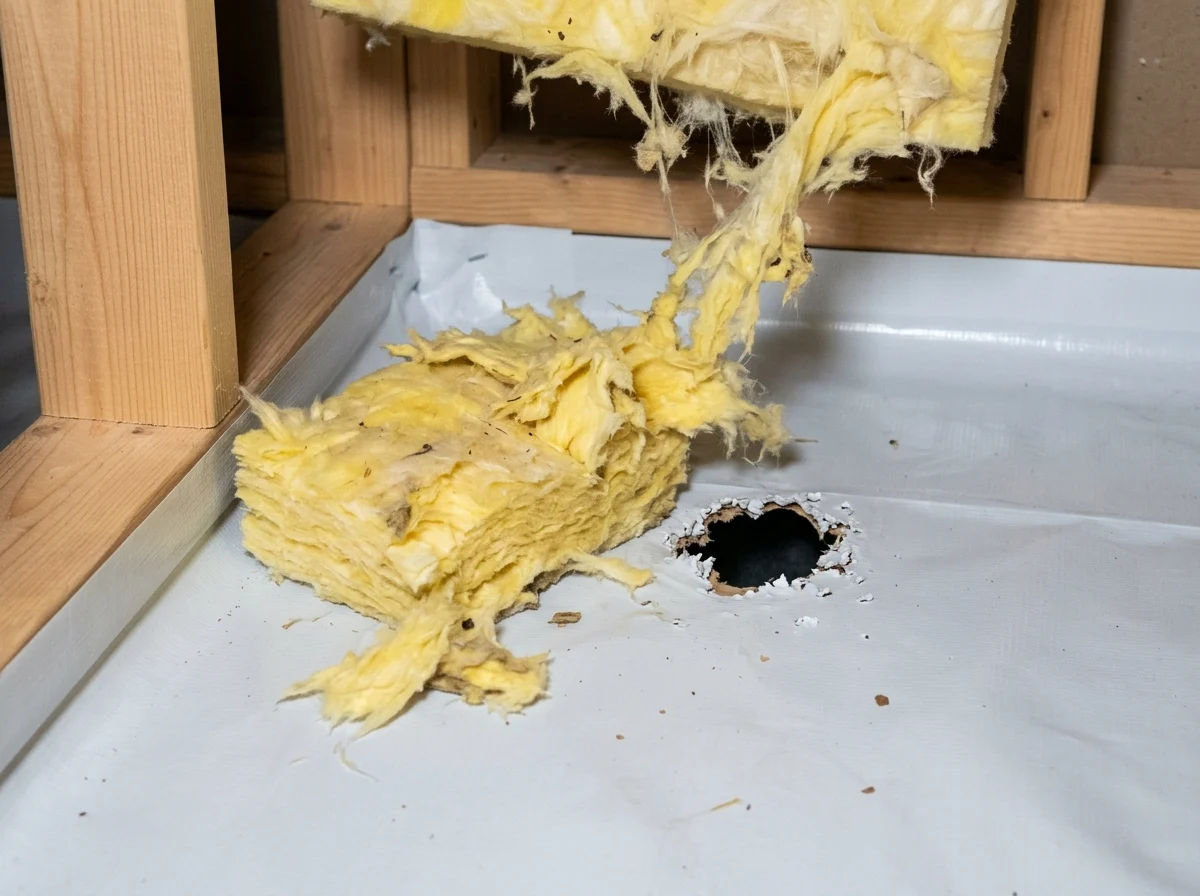
What Rodents in Crawl Space Actually Leave Behind
Rodents are hard to catch in the act, but they leave clear evidence behind. This is what to look for on your next trip near the crawl space.
Why Rodents Keep Getting In
Rodents do not appear at random. They follow the same gaps and openings that let moisture and outside air into your crawl space.
Open vents and unsealed gaps
An easy, undisturbed space to nest in
Moisture that draws them in
Not sure which one you have? That's exactly why we diagnose first.
How Serious Is It
Rodents are a separate problem from the moisture and gaps that let them in, but the two make each other worse the longer they sit.
Caught early: seal the entry points
Caught early, sealing the gaps and vents that are letting rodents in usually stops new activity fast, and the insulation and vapor barrier damage is still limited.
Left alone: more damage, more openings
Left alone, rodents keep widening their entry points and tearing up more insulation and vapor barrier, and an active problem can grow before you ever hear it. The moisture behind it does not fix itself either.
The Prescription
Sealing your crawl space stops rodents from getting in and staying in. Here is what we actually do, and what we are straight with you that we do not do.
Crawl Space Encapsulation
We seal the crawl space with a full vapor barrier and close off the gaps, vents, and openings rodents were using to get in, so there is no easy way back under your home.
Best for: Crawl spaces with visible entry points, torn insulation, or chewed vapor barrier.
Vent Sealing & Insulation
We seal or screen the vents rodents were using and replace insulation and vapor barrier that has already been chewed or dragged apart, so the space is sound again once it is closed off.
Best for: Crawl spaces where the damage is done and the insulation needs replacing along with the sealing.
When it's an active infestation, we say so
If mice or rats are actively living in your crawl space right now, that is a pest control job first. We will tell you plainly to call an exterminator, and once the infestation is cleared, we seal the crawl space so they cannot get back in.
Best for: Homes with current rodent activity, before any sealing work is done.
We diagnose. We prescribe. We treat.
A lot of foundation repair companies show up to sell you the most expensive thing they install. We show up to figure out what's actually wrong under your home first, then prescribe the repair that fixes it, and tell you straight, even when the answer is "you don't need as much as you were told." That's the difference between a sales call and a diagnosis.
Diagnose
A free in-home inspection by someone who does this work, not a commission salesperson. We look at the real signs, inside and underneath, and walk you through what's actually causing the movement. You get a clear, honest read on where your home stands.
Prescribe
We lay out the right fix for what's actually wrong, not the priciest line item. A plain-English explanation, a fair price in writing, and the warranty terms with it. We go over the plan and your options, and you decide on your own time. No "today only" pressure.
Treat
Dependable work by our own local crew, on time, cleaned up after themselves, and finished on or ahead of schedule, the way our customers describe it. We keep you in the loop the whole way, and we stand behind the work for the life of the structure.
Most foundation companies sell you a fix. We diagnose first, then prescribe only what your home actually needs. That's the difference between an honest local team and a sales quota from out of town.
Related Warning Signs
A crawl space open enough for rodents is usually open to moisture too. If you are seeing these signs as well, they point to the same gaps.
Wet or musty crawl space
Crawl space humidity and condensation
Cold, drafty floors
Not sure which one you have? That's exactly why we diagnose first.
Straight Answers About Rodents in a Crawl Space
Get a straight diagnosis on what's getting into your crawl space, free.
You won't get a sales pitch. You'll get a real look at how rodents are getting in, what has already been damaged, and a fair price in writing to seal it up for good.