
What you're seeing
Signs you may need subfloor replacement
A soft subfloor rarely happens all at once. These are the signs homeowners usually notice first, especially near water.
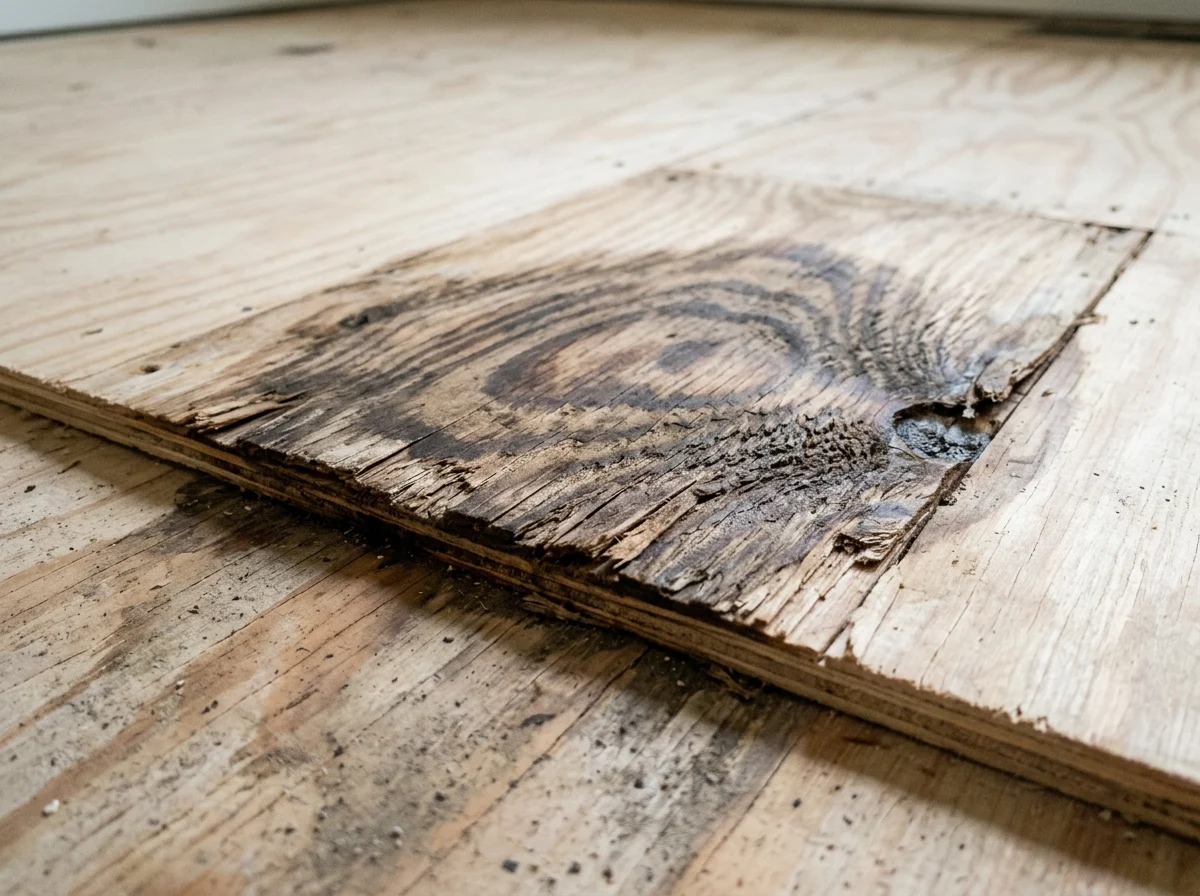
What's actually softening the subfloor
A subfloor doesn't go soft from foot traffic. It goes soft from water it was never built to handle. Here's where that water usually comes from.
A slow leak at a tub, shower, or toilet
Water getting in at an exterior wall
Humidity rising from an unsealed crawl space
Not sure which one you have? That's exactly why we diagnose first.
A soft subfloor only spreads, it doesn't heal
Wet plywood doesn't dry out and firm back up on its own. What changes is how much of the floor it reaches before someone fixes it.
Patch the one section
Caught early, a soft spot is usually a small, contained patch: cut out the damaged section, confirm the joists underneath are still sound, and rebuild that piece. That's the smallest version of this repair.
It spreads under the flooring
Left alone, the soft spot spreads under whatever flooring is on top, the surface starts to crack or lift, and the joists underneath can eventually start absorbing the same water. The repair gets bigger the longer it sits.
How subfloor replacement actually works
The right fix depends on how far the water damage has spread and where the water is actually coming from. These are the methods we actually use, matched to the diagnosis. We prescribe the one that solves it, not the most expensive one on the list.
Floor Rebuilds
We cut out the soft, water-damaged subfloor and any affected framing underneath and replace it with solid new material, so the floor is firm to walk on again.
Best for: A soft or spongy spot that's already spread past a small patch.
Crawl Space Waterproofing & Encapsulation
When the moisture is rising from an unsealed crawl space rather than a fixture, sealing and conditioning the crawl space stops the wood underneath from soaking again.
Best for: Soft spots along an exterior wall with no plumbing fixture nearby.
When it's a plumbing leak, not us
If an active leak, like a toilet or tub, is what's soaking the subfloor, that needs a plumber's fix first. We'll tell you plainly and can still handle the wood damage once the leak is stopped.
Best for: Homeowners who want to know exactly who fixes what before they spend anything.
We diagnose. We prescribe. We treat.
A lot of foundation repair companies show up to sell you the most expensive thing they install. We show up to figure out what's actually wrong under your home first, then prescribe the repair that fixes it, and tell you straight, even when the answer is "you don't need as much as you were told." That's the difference between a sales call and a diagnosis.
Diagnose
A free in-home inspection by someone who does this work, not a commission salesperson. We look at the real signs, inside and underneath, and walk you through what's actually causing the movement. You get a clear, honest read on where your home stands.
Prescribe
We lay out the right fix for what's actually wrong, not the priciest line item. A plain-English explanation, a fair price in writing, and the warranty terms with it. We go over the plan and your options, and you decide on your own time. No "today only" pressure.
Treat
Dependable work by our own local crew, on time, cleaned up after themselves, and finished on or ahead of schedule, the way our customers describe it. We keep you in the loop the whole way, and we stand behind the work for the life of the structure.
Most foundation companies sell you a fix. We diagnose first, then prescribe only what your home actually needs. That's the difference between an honest local team and a sales quota from out of town.
A soft subfloor rarely stands alone
The water that softened your subfloor usually leaves other signs nearby. If you're seeing these too, they point to the same cause.
Rotted floor joists
Wet or musty crawl space
Cracked tile or grout
Not sure which one you have? That's exactly why we diagnose first.
Straight answers about subfloor replacement
Get a straight diagnosis on your soft subfloor, free.
You won't get a sales pitch. You'll get a straight answer on how far the water damage has spread, what it takes to rebuild that section of subfloor, a fair price in writing, and a plain answer on whether the leak itself is ours to fix or a plumber's.