What you're seeing
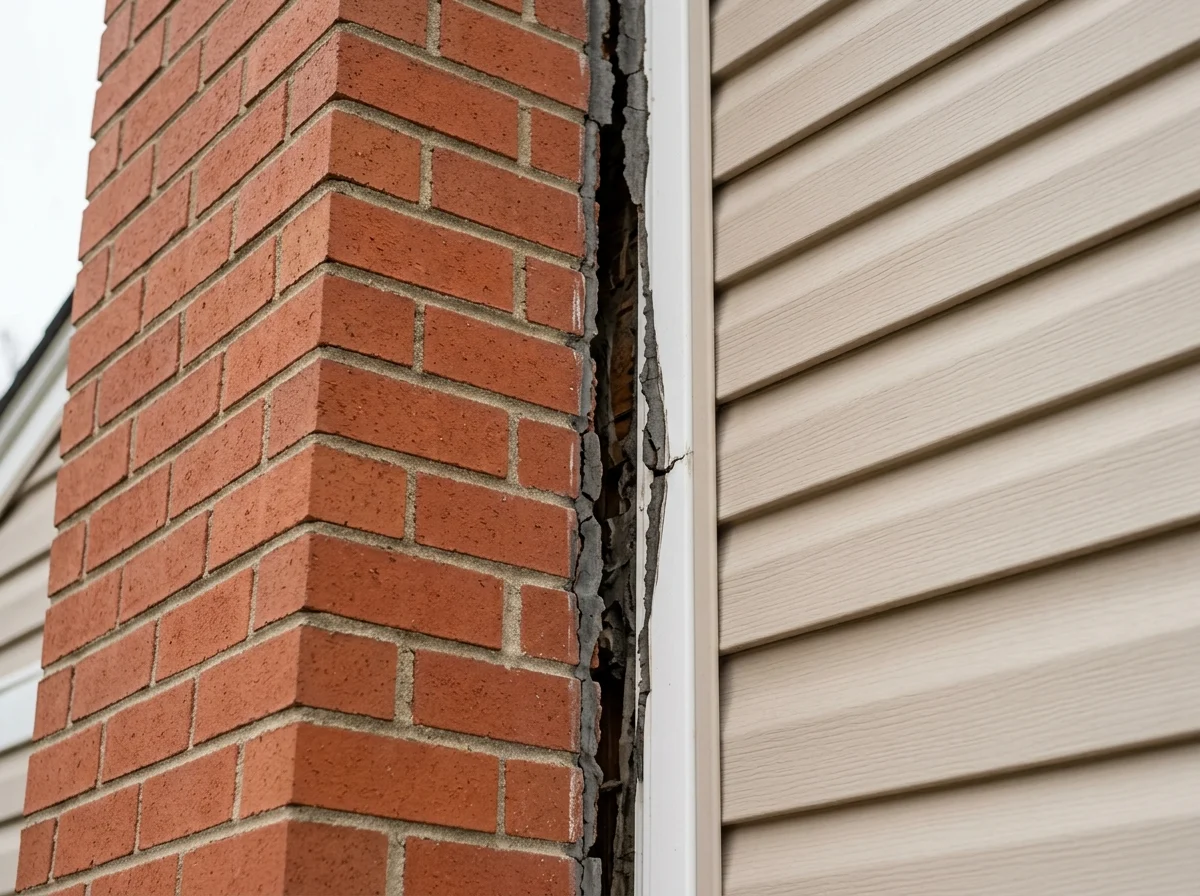
What a settling chimney looks like
A chimney tells on itself earlier than most of the house, because it is tall and narrow and any lean shows. Here is what to look at.
Why chimneys settle before the rest of the house
It comes down to weight and footing size. A chimney concentrates an enormous load on a very small patch of ground.
A footing that can't carry the weight
Expansive red clay
Water at the base of the stack
Not sure which one you have? That's exactly why we diagnose first.
This is the one we tell people not to wait on
Most foundation signs are progressive but patient. A leaning chimney is progressive and eventually becomes a safety question.
Stabilize it and stop the lean
A chimney that has begun to separate can usually be underpinned and held where it is. That protects the flashing, the flue, and the wall it is pulling away from, and it is far less work than what comes after.
It becomes a safety issue, not a crack
A leaning chimney keeps leaning. Flue liners crack, flashing leaks into the wall, and a badly leaning stack becomes a genuine hazard that has to come down and be rebuilt. Nothing about waiting makes this one cheaper or safer.
How we stabilize a settling chimney
The work happens at the footing, not at the top of the stack. Here is what we actually do, and where we hand it off.
Pier Stabilization
Steel piers set under the chimney footing carry the load down to soil that will actually hold it, and the settling stops. Where the ground allows, we can often recover some of the lean.
Best for: Chimneys that have settled and separated from the house.
Repairing the wall and flashing
Once the movement is stopped, the separation, the mortar joints, and the flashing get closed up so water stays out of the wall behind it.
Best for: Finishing the job after the settlement is corrected.
When it needs a mason, not us
If the stack itself has failed and needs to come down and be rebuilt, that is masonry work. We will tell you that plainly rather than sell you piers under a chimney that is not going to stand.
Best for: Stacks that have already failed structurally.
We diagnose. We prescribe. We treat.
A lot of foundation repair companies show up to sell you the most expensive thing they install. We show up to figure out what's actually wrong under your home first, then prescribe the repair that fixes it, and tell you straight, even when the answer is "you don't need as much as you were told." That's the difference between a sales call and a diagnosis.
Diagnose
A free in-home inspection by someone who does this work, not a commission salesperson. We look at the real signs, inside and underneath, and walk you through what's actually causing the movement. You get a clear, honest read on where your home stands.
Prescribe
We lay out the right fix for what's actually wrong, not the priciest line item. A plain-English explanation, a fair price in writing, and the warranty terms with it. We go over the plan and your options, and you decide on your own time. No "today only" pressure.
Treat
Dependable work by our own local crew, on time, cleaned up after themselves, and finished on or ahead of schedule, the way our customers describe it. We keep you in the loop the whole way, and we stand behind the work for the life of the structure.
Most foundation companies sell you a fix. We diagnose first, then prescribe only what your home actually needs. That's the difference between an honest local team and a sales quota from out of town.
A leaning chimney rarely travels alone
The same soil that drops a chimney footing is usually working on the rest of the foundation too. These are the places it shows up next.
Stair-step cracks in brick
Cracks in brick or block
Bowing or leaning walls
Not sure which one you have? That's exactly why we diagnose first.
Straight answers about a leaning chimney
Get your chimney looked at before it leans further, free.
You won't get a sales pitch. You'll get a real read on how far the stack has moved, whether the flashing and flue are already compromised, what it takes to stabilize it, and a fair price in writing.