
What you're seeing
What a gap at the baseboard is actually showing you
A gap at the bottom of the trim is one of the more reliable signs something moved underneath. Here's what to look for and what each version usually means.
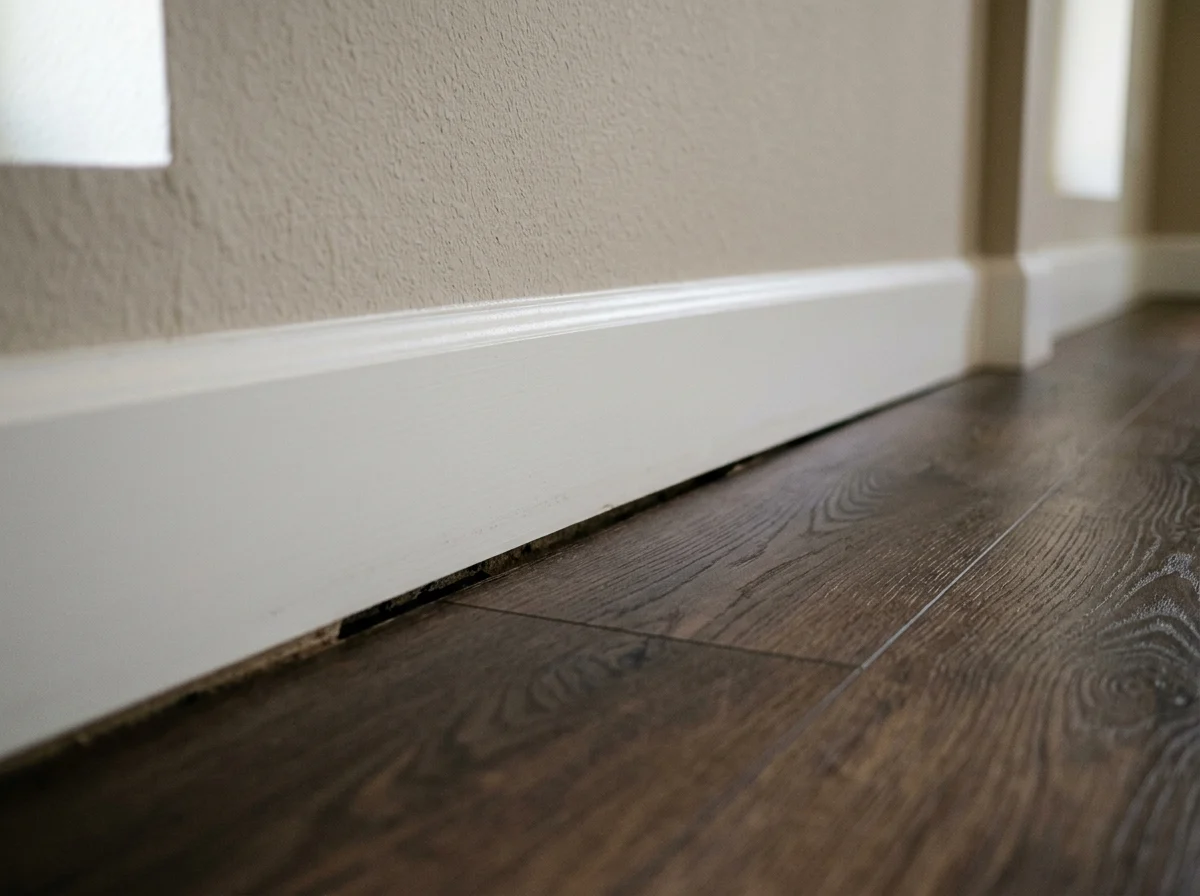
What's actually opening the gap
The floor and the wall used to meet evenly. Here's what we look for underneath to find out why they don't anymore.
The floor settling faster than the wall
A weak point in the crawl space below
West Georgia's clay soil doing what it does
Not sure which one you have? That's exactly why we diagnose first.
How much a baseboard gap actually matters
A small, unchanging gap is common in an older home. A gap that's still growing is the floor telling you the drop hasn't stopped.
Caught early: support it before it drops further
If the drop is still small, we can usually add support at the one weak point underneath and take most or all of the gap back out, without touching your trim or flooring.
Left alone: the gap keeps opening
The floor doesn't stop dropping on its own. Left alone, the gap widens, more of the room joins in, and the eventual repair covers more ground than it would have if we'd caught it early.
How we close the gap at the baseboard
The right fix depends on how far the floor has dropped and whether it's still moving. We prescribe the one that matches your floor, not the biggest job on the list.
Sagging Floor Repair
We support the floor from the crawl space underneath and bring it back up, or as close to level as the framing allows, which closes the gap at its source.
Best for: A gap that has grown or widened, especially with sagging or bounce in the same room.
Crawl Space Support Repair
New posts, beams, or footings placed under the exact spot where the floor is dropping, targeted rather than propping up the whole room.
Best for: A gap concentrated along one wall or in one room, with a specific weak point underneath.
When it's the trim, not the frame
A small gap that has always been there, doesn't grow, and shows up along one short run of baseboard is often just trim, not a foundation problem. We'll tell you that instead of quoting work you don't need.
Best for: A small, stable gap in one short stretch that isn't paired with sagging, bouncing, or sticking doors.
We diagnose. We prescribe. We treat.
A lot of foundation repair companies show up to sell you the most expensive thing they install. We show up to figure out what's actually wrong under your home first, then prescribe the repair that fixes it, and tell you straight, even when the answer is "you don't need as much as you were told." That's the difference between a sales call and a diagnosis.
Diagnose
A free in-home inspection by someone who does this work, not a commission salesperson. We look at the real signs, inside and underneath, and walk you through what's actually causing the movement. You get a clear, honest read on where your home stands.
Prescribe
We lay out the right fix for what's actually wrong, not the priciest line item. A plain-English explanation, a fair price in writing, and the warranty terms with it. We go over the plan and your options, and you decide on your own time. No "today only" pressure.
Treat
Dependable work by our own local crew, on time, cleaned up after themselves, and finished on or ahead of schedule, the way our customers describe it. We keep you in the loop the whole way, and we stand behind the work for the life of the structure.
Most foundation companies sell you a fix. We diagnose first, then prescribe only what your home actually needs. That's the difference between an honest local team and a sales quota from out of town.
A baseboard gap rarely shows up alone
Whatever pulled your floor away from the wall usually leaves other signs in the same room. If any of these look familiar too, they belong to the same diagnosis.
Sagging or bouncy floors
Cracks in drywall or trim
Squeaky floors
Not sure which one you have? That's exactly why we diagnose first.
Straight answers about gaps at the baseboard
Get a straight answer on your baseboard gap, free.
You won't get a sales pitch. You'll get someone under your house looking at the actual support beneath that spot, a plain-English read on why the gap opened, and a fair price in writing to close it.