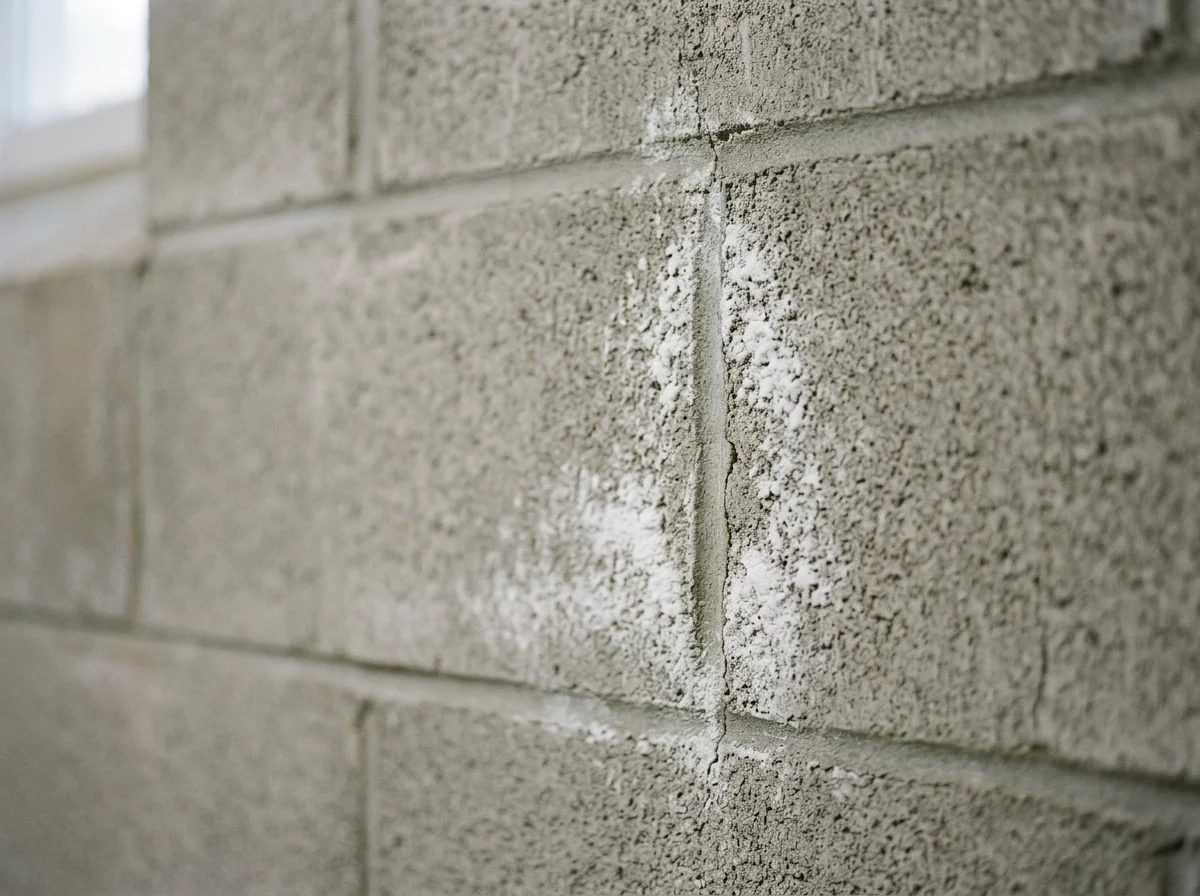
What you're seeing
What efflorescence on basement walls actually is
It shows up in a few recognizable ways. If any of these match your basement wall, that white residue is telling you something specific.
What's actually leaving that powder behind
Efflorescence isn't the problem itself, it's evidence. Here's what's really going on behind the wall.
Water in the masonry
Hydrostatic pressure
No vapor barrier
Not sure which one you have? That's exactly why we diagnose first.
The powder is harmless. The water behind it isn't.
Efflorescence by itself won't hurt your wall, but it's a signpost for something that can, if the water behind it keeps coming.
Treat it and move on
If the wall is otherwise sound and the water is still manageable, treating the source, whether that's the wall, the drainage, or the grading outside, is usually a straightforward, contained job.
The water problem grows
The water causing the efflorescence is the same water that can lead to mold, wood rot in nearby framing, and a musty smell through the house. The powder itself won't get worse, but what's behind it usually does.
How we treat efflorescence and the water behind it
Efflorescence tells us where to look, not what to do about it on its own. The right fix depends on where the water is actually coming from.
Basement Wall Treatment
We treat the interior wall surface to manage the moisture moving through it, so the water stops migrating into your basement air and finish.
Best for: Walls with active efflorescence and ongoing dampness.
Interior Drainage System
A drain system along the basement floor perimeter intercepts water before it can build up pressure against the wall, carrying it to a sump system instead.
Best for: Basements where the water volume, not just the wall surface, needs to be managed.
When it's old and dry, not active
Sometimes the powder is left over from water that got in once, and the wall has been dry for a long time since. When that's the case, we say so. A good cleaning is all it needs, not a repair.
Best for: Walls with old, dry efflorescence and no sign of ongoing moisture.
We diagnose. We prescribe. We treat.
A lot of foundation repair companies show up to sell you the most expensive thing they install. We show up to figure out what's actually wrong under your home first, then prescribe the repair that fixes it, and tell you straight, even when the answer is "you don't need as much as you were told." That's the difference between a sales call and a diagnosis.
Diagnose
A free in-home inspection by someone who does this work, not a commission salesperson. We look at the real signs, inside and underneath, and walk you through what's actually causing the movement. You get a clear, honest read on where your home stands.
Prescribe
We lay out the right fix for what's actually wrong, not the priciest line item. A plain-English explanation, a fair price in writing, and the warranty terms with it. We go over the plan and your options, and you decide on your own time. No "today only" pressure.
Treat
Dependable work by our own local crew, on time, cleaned up after themselves, and finished on or ahead of schedule, the way our customers describe it. We keep you in the loop the whole way, and we stand behind the work for the life of the structure.
Most foundation companies sell you a fix. We diagnose first, then prescribe only what your home actually needs. That's the difference between an honest local team and a sales quota from out of town.
That white residue rarely shows up by itself
The water leaving that mineral residue behind is often doing other things too. If you're seeing any of these, they usually trace back to the same source.
Water in the basement after a hard rain
Cracks in the brick or block
A sump pump running non-stop
Not sure which one you have? That's exactly why we diagnose first.
Straight answers about efflorescence on basement walls
Get a straight answer on that white powder, free.
You won't get a sales pitch. You'll get a real read on where the water behind that residue is coming from, whether it's old and dry or still active, and a fair price in writing if a fix is even needed.