
What you're seeing
What a racking door frame looks like
Wood moves a little with the seasons and that is normal. These are the signs that say something structural is behind it instead.
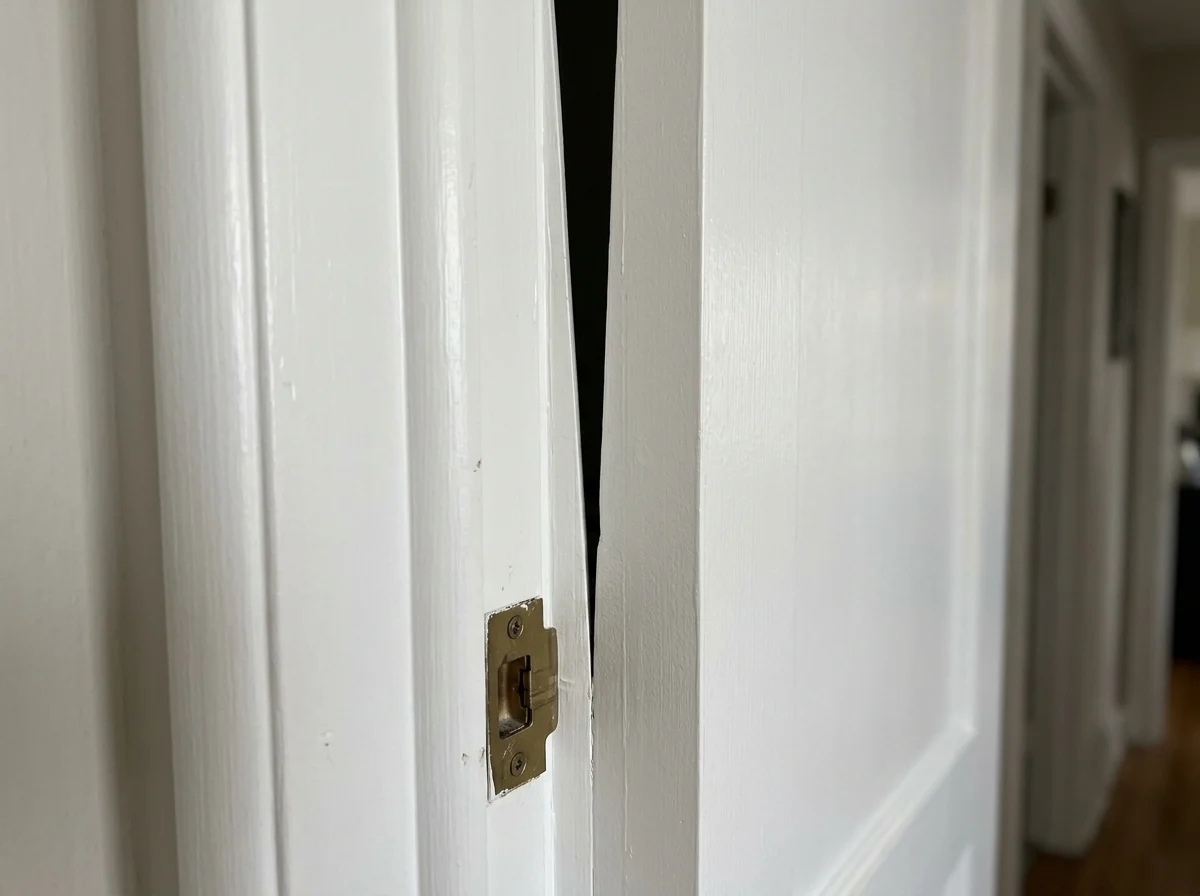
What's pulling your frames out of square
A quarter inch of movement in the structure is more than enough to stop a door from latching. Here are the three things that usually put it there.
Foundation settlement
A failing support system underneath
Moisture swelling the framing
Not sure which one you have? That's exactly why we diagnose first.
Doors are usually the first thing you notice
That is good news. Noticing early is what keeps this from becoming a list of repairs instead of one.
Fix the cause, the doors follow
Correct the settlement or the failing supports now and the frames come back toward square, before the drywall and the brick outside start telling the same story. This is the cheapest and least disruptive point on the whole timeline.
It spreads to everything attached to the frame
Movement that keeps going cracks drywall and trim, separates the brick outside, and eventually damages the doors and windows themselves. Replacing a door in a frame that is still moving buys you a season at most.
How we get your frames back to square
The fix depends on where the movement is coming from, and that is a question we answer before we quote anything. These are the methods we actually perform.
Pier Stabilization
Steel piers carry the settled section down to soil that will hold it and lock it there, so the wall above stops tipping and the frame stops racking.
Best for: Homes where the frames are racking because the foundation has settled.
Crawl Space Support Repair
New posts, beams, and proper footings under the joists take the sag out of the floor system, so the walls standing on it stop dropping.
Best for: Crawl space homes where the movement comes from underneath, not from the footing.
When it's just the door
Sometimes the house is fine and the door needs a plane and a new strike plate. We will tell you when that is the case. We are not going to sell you a foundation job to fix a forty dollar problem.
Best for: Seasonal sticking with no measurable movement in the structure.
We diagnose. We prescribe. We treat.
A lot of foundation repair companies show up to sell you the most expensive thing they install. We show up to figure out what's actually wrong under your home first, then prescribe the repair that fixes it, and tell you straight, even when the answer is "you don't need as much as you were told." That's the difference between a sales call and a diagnosis.
Diagnose
A free in-home inspection by someone who does this work, not a commission salesperson. We look at the real signs, inside and underneath, and walk you through what's actually causing the movement. You get a clear, honest read on where your home stands.
Prescribe
We lay out the right fix for what's actually wrong, not the priciest line item. A plain-English explanation, a fair price in writing, and the warranty terms with it. We go over the plan and your options, and you decide on your own time. No "today only" pressure.
Treat
Dependable work by our own local crew, on time, cleaned up after themselves, and finished on or ahead of schedule, the way our customers describe it. We keep you in the loop the whole way, and we stand behind the work for the life of the structure.
Most foundation companies sell you a fix. We diagnose first, then prescribe only what your home actually needs. That's the difference between an honest local team and a sales quota from out of town.
Sticking doors rarely travel alone
The movement that racks a door frame usually shows up somewhere else too. If you are seeing these, they point to the same diagnosis.
Stair-step cracks in brick
Cracks in drywall or trim
Sagging or bouncy floors
Not sure which one you have? That's exactly why we diagnose first.
Straight answers about doors that won't close
Find out what's really behind that stuck door, free.
You won't get a sales pitch. You'll get a real read on whether it's the door, the moisture, or the foundation, what it takes to correct it, and a fair price in writing. If all you need is a plane and a strike plate, we'll tell you that.