What you're seeing
What a moisture problem looks like
Most of these show up long before you ever see standing water. If you recognize two or three, it is worth having looked at.
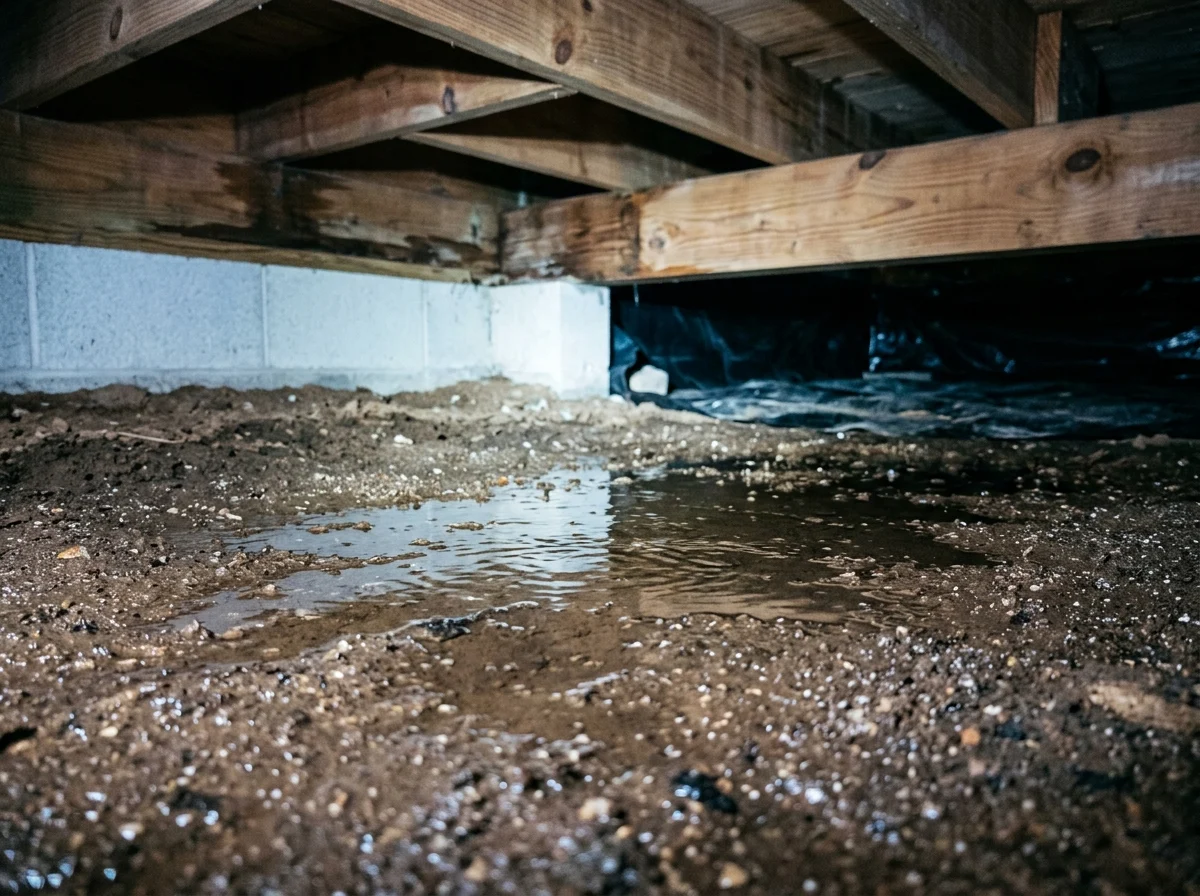
Where the water is actually coming from
It is not always a leak. In our climate, most of the moisture under a house never came through a crack at all.
Groundwater and soil pressure
An open, unsealed crawl space
Water that isn't managed outside
Not sure which one you have? That's exactly why we diagnose first.
Moisture is what turns other problems into big ones
Water under a house does not stay a water problem. It becomes a wood problem, then a structural one.
Dry it out and the damage stops
Moisture caught before it rots framing is a waterproofing and encapsulation job. Seal it, control the water, and you get healthier air upstairs, a home that is cheaper to cool, and floors that stay put.
It turns into structural work
Sustained moisture rots joists, girders, and subfloor, warps flooring, feeds mold, and invites pests underneath. At that point you are paying for framing repair on top of the waterproofing you needed in the first place.
How we dry it out and keep it dry
Basements and crawl spaces get different treatments, and some houses only need the water outside handled. The inspection is what decides which.
Basement Waterproofing
Interior drainage, a sump system, and wall treatment take the water that reaches your foundation and move it out instead of letting it stand against the wall.
Best for: Basements with standing water, seepage, or walls that are wet after rain.
Crawl Space Encapsulation
A sealed vapor barrier over the ground and up the walls, closed vents, and a dehumidifier turn a damp crawl space into a dry, conditioned one. Drier air upstairs, less load on your AC, and nothing living under there.
Best for: Crawl spaces with bare dirt, high humidity, or a musty smell.
Fixing the water outside first
Sometimes the fix starts with gutters, downspouts, and grading, and it costs a fraction of a system. If that is what your house needs, that is what we will tell you.
Best for: Homes where surface water is the whole problem.
We diagnose. We prescribe. We treat.
A lot of foundation repair companies show up to sell you the most expensive thing they install. We show up to figure out what's actually wrong under your home first, then prescribe the repair that fixes it, and tell you straight, even when the answer is "you don't need as much as you were told." That's the difference between a sales call and a diagnosis.
Diagnose
A free in-home inspection by someone who does this work, not a commission salesperson. We look at the real signs, inside and underneath, and walk you through what's actually causing the movement. You get a clear, honest read on where your home stands.
Prescribe
We lay out the right fix for what's actually wrong, not the priciest line item. A plain-English explanation, a fair price in writing, and the warranty terms with it. We go over the plan and your options, and you decide on your own time. No "today only" pressure.
Treat
Dependable work by our own local crew, on time, cleaned up after themselves, and finished on or ahead of schedule, the way our customers describe it. We keep you in the loop the whole way, and we stand behind the work for the life of the structure.
Most foundation companies sell you a fix. We diagnose first, then prescribe only what your home actually needs. That's the difference between an honest local team and a sales quota from out of town.
Moisture rarely travels alone
Water under the house works on everything it touches. These are the problems it causes most often once it has been there a while.
Sagging or bouncy floors
Bowing or leaning walls
Cracks in brick or block
Not sure which one you have? That's exactly why we diagnose first.
Straight answers about wet and musty spaces
Get your crawl space or basement diagnosed, free.
You won't get a sales pitch. You'll get someone underneath your house finding where the water is actually coming from, a plain-English read on what it's already done to the wood, what it takes to dry it out, and a fair price in writing.