
What you're seeing
What sloping floors actually look like
A sloping floor shows up in small, specific ways before most people notice the tilt itself. If any of these look familiar, it's worth getting diagnosed.
What's actually tilting the floor
A sloping floor is almost always a foundation problem wearing a flooring disguise. Here's what we look for underneath before we prescribe anything.
Uneven settling under one section
West Georgia red clay swelling unevenly
Water pooling on one side of the house
Not sure which one you have? That's exactly why we diagnose first.
Sloping floors only move one direction: worse
The settling that tilts a floor doesn't reverse on its own. What changes is how much of the house it reaches, and how much it costs to fix.
Support the settling point
Caught early, we can often stabilize the one section that's settling with piers or added support, before the tilt spreads to more of the room or the next room over. This is the simplest and least expensive version of this fix.
It spreads and gets pricier
Left alone, the settling keeps going, the slope gets more noticeable, and it can reach doors, windows, and neighboring rooms. The fix doesn't change in kind, but the scope and the cost both grow the longer it's left.
How we bring a sloping floor back level
The right fix depends on whether the foundation is still settling or the floor's own support has failed. These are the methods we actually use, matched to the diagnosis. We prescribe the one that solves it, not the most expensive one on the list.
Pier Stabilization
Steel piers are driven down to load bearing soil under the settling section, taking the weight off the failing soil so it stops sinking, and in many cases lifting the section back toward level.
Best for: A floor that's sloping because one section of the foundation is actively settling.
Sagging Floor Repair
Where the tilt traces back to the floor's own support system rather than the foundation, we add proper posts and beams underneath to bring the floor back to level and firm.
Best for: A slope caused by the framing under the floor, not the foundation itself.
When it's stable, we say so
Some floors have been out of level since the house was built decades ago, or the settling stopped long ago on its own. We tell you honestly when a slope is old history instead of a current problem.
Best for: Homeowners who just want to know if they actually need to do anything at all.
We diagnose. We prescribe. We treat.
A lot of foundation repair companies show up to sell you the most expensive thing they install. We show up to figure out what's actually wrong under your home first, then prescribe the repair that fixes it, and tell you straight, even when the answer is "you don't need as much as you were told." That's the difference between a sales call and a diagnosis.
Diagnose
A free in-home inspection by someone who does this work, not a commission salesperson. We look at the real signs, inside and underneath, and walk you through what's actually causing the movement. You get a clear, honest read on where your home stands.
Prescribe
We lay out the right fix for what's actually wrong, not the priciest line item. A plain-English explanation, a fair price in writing, and the warranty terms with it. We go over the plan and your options, and you decide on your own time. No "today only" pressure.
Treat
Dependable work by our own local crew, on time, cleaned up after themselves, and finished on or ahead of schedule, the way our customers describe it. We keep you in the loop the whole way, and we stand behind the work for the life of the structure.
Most foundation companies sell you a fix. We diagnose first, then prescribe only what your home actually needs. That's the difference between an honest local team and a sales quota from out of town.
A sloping floor rarely shows up alone
The same settling that tilts a floor usually leaves other clues around the house. If you're seeing these too, they point to the same diagnosis.
Sagging or bouncy floors
Doors and windows sticking
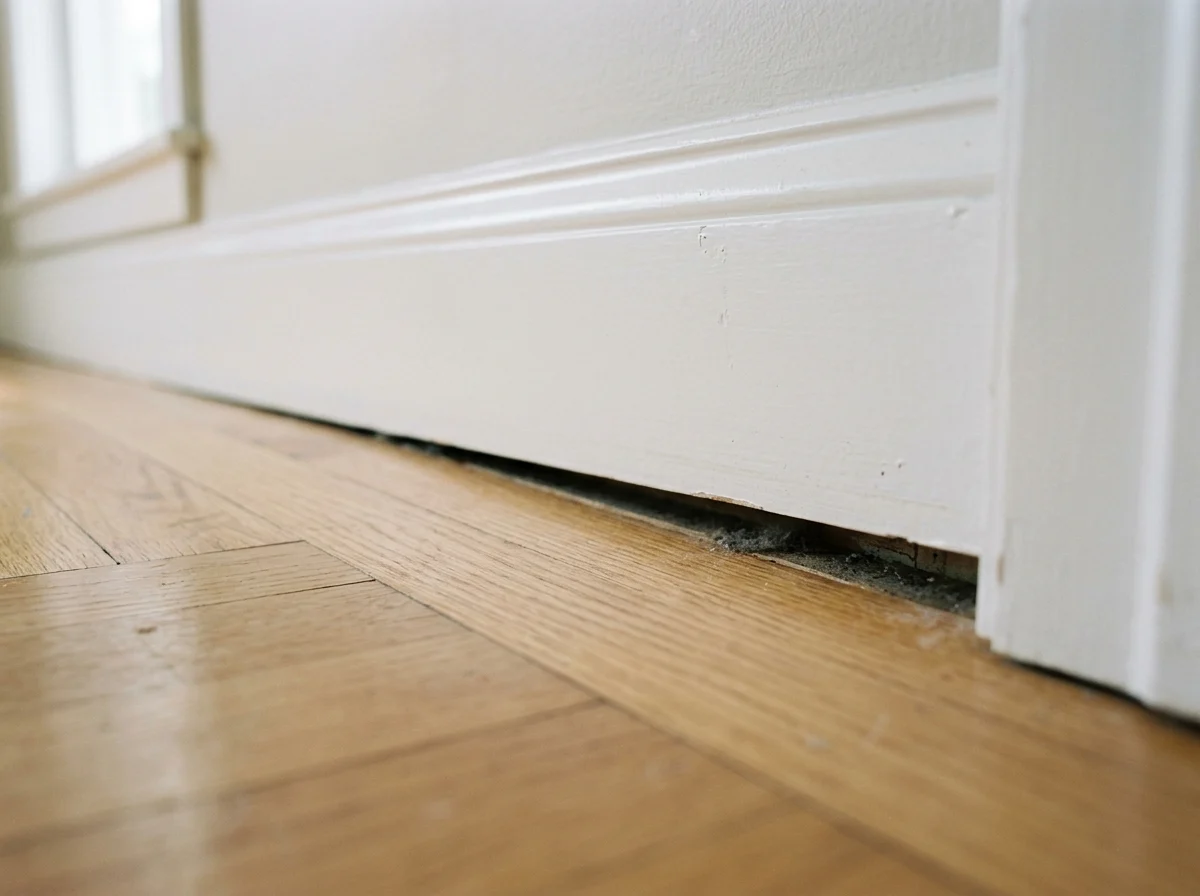
Gaps at the baseboards
Not sure which one you have? That's exactly why we diagnose first.
Straight answers about sloping floors
Get a straight diagnosis on your sloping floor, free.
You won't get a sales pitch. You'll get a real read on why that floor is out of level, whether it's still moving, what it actually takes to bring it back level, and a fair price in writing. If it's old and stable, we'll tell you that too.