
What you're seeing
Signs you need floor joist repair
Rotted joists don't always announce themselves right away. These are the signs that usually show up first, from inside the house and underneath it.
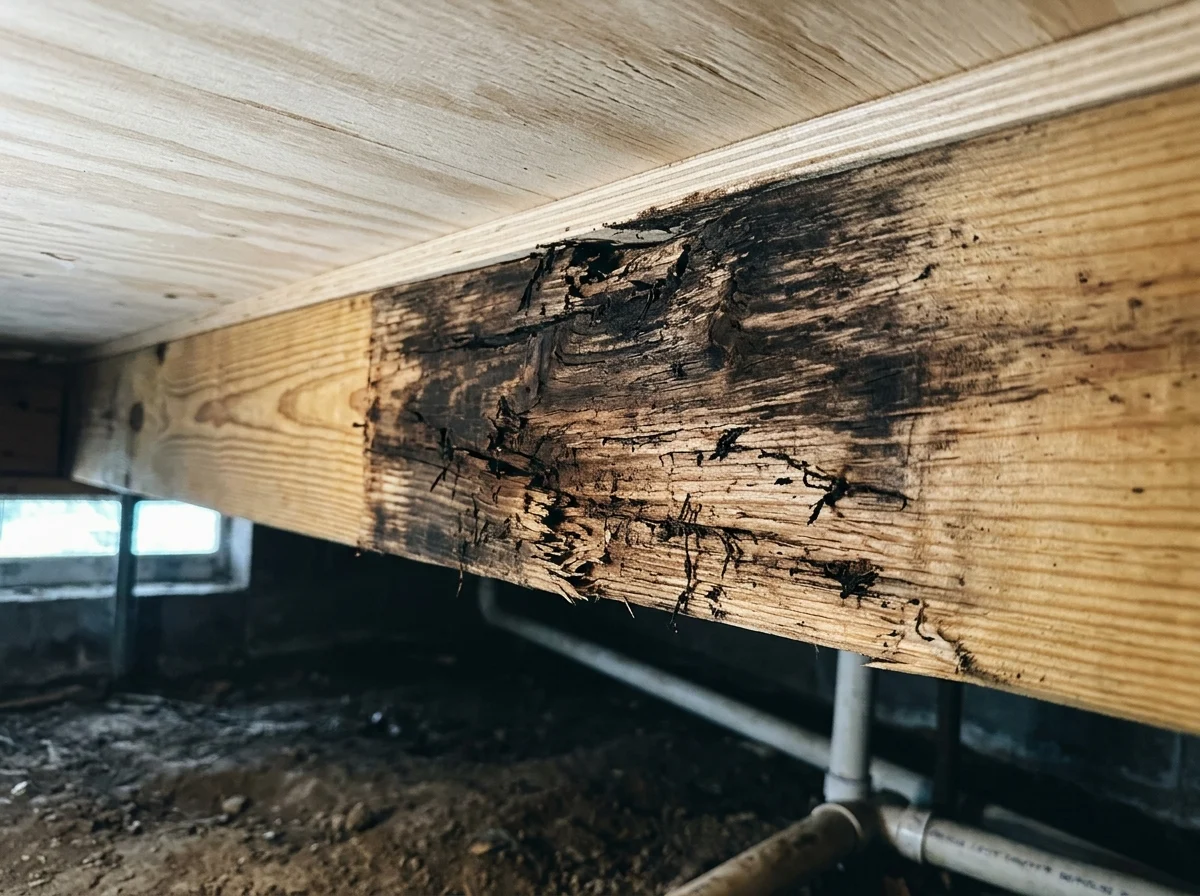
What actually rots a floor joist
Wood does not rot on its own. It rots because it stays wet. Here's what usually sets it up.
Chronic crawl space humidity
A leak that went unnoticed
Age and original construction
Not sure which one you have? That's exactly why we diagnose first.
Rotted joists only go one direction: worse
Wood that's actively rotting doesn't stop or repair itself. What changes is how much of the framing is affected by the time it's fixed.
Sister or replace the one joist
Caught early, a rotted joist is often a targeted repair: sistering a new board alongside it or replacing that one section, along with fixing the moisture that caused it. That's the smallest, least expensive version of this job.
It spreads to the floor above
Left alone, rot spreads to the joists next to it and the floor above starts to sag or bounce for real. At that point the repair covers more of the floor system, not just one board, and the cost grows to match.
How floor joist repair actually works
The right fix depends on how far the rot has spread and what's kept the wood wet. These are the methods we actually use, matched to the diagnosis. We prescribe the one that solves it, not the most expensive one on the list.
Crawl Space Support Repair
We get underneath the floor, sister or fully replace the joists that have rotted, and set new posts, beams, and footings so the floor has solid support again.
Best for: Joists that have visibly rotted, split, or lost their bearing at a post or beam.
Crawl Space Waterproofing & Encapsulation
Sealing the crawl space and managing the moisture with a vapor barrier, drainage, or a dehumidifier stops the wood from soaking again once the repair is done.
Best for: Crawl spaces where humidity or standing water is the real reason the wood failed.
When one joist is the whole job
Plenty of jobs need one or two joists sistered, not a full floor rebuild. We replace what has actually failed and tell you plainly when the rest of the framing is sound.
Best for: Homeowners who want to know exactly how much of the floor is really affected before they commit to anything.
We diagnose. We prescribe. We treat.
A lot of foundation repair companies show up to sell you the most expensive thing they install. We show up to figure out what's actually wrong under your home first, then prescribe the repair that fixes it, and tell you straight, even when the answer is "you don't need as much as you were told." That's the difference between a sales call and a diagnosis.
Diagnose
A free in-home inspection by someone who does this work, not a commission salesperson. We look at the real signs, inside and underneath, and walk you through what's actually causing the movement. You get a clear, honest read on where your home stands.
Prescribe
We lay out the right fix for what's actually wrong, not the priciest line item. A plain-English explanation, a fair price in writing, and the warranty terms with it. We go over the plan and your options, and you decide on your own time. No "today only" pressure.
Treat
Dependable work by our own local crew, on time, cleaned up after themselves, and finished on or ahead of schedule, the way our customers describe it. We keep you in the loop the whole way, and we stand behind the work for the life of the structure.
Most foundation companies sell you a fix. We diagnose first, then prescribe only what your home actually needs. That's the difference between an honest local team and a sales quota from out of town.
Rotted joists leave other clues too
Wood that has failed underneath the floor rarely stays hidden. If you're seeing any of these as well, they often trace back to the same joists.
Soft or spongy subfloor
Wet or musty crawl space
Sagging or bouncy floors
Not sure which one you have? That's exactly why we diagnose first.
Straight answers about floor joist repair
Get a straight quote on your floor joist repair, free.
You won't get a sales pitch. You'll get a real look at which joists have failed, what's been soaking them, a written scope for only the repair you actually need, and a fair price before any work starts.